One foot lifts. Three stay on the wall.
HAMR-E coordinates foot adhesion with its stepping sequence. Electroadhesive pads maintain contact, while passive ankle joints accommodate curved surfaces. The research video shows a foot detaching, swinging forwards and attaching again.
What do the experiments show?
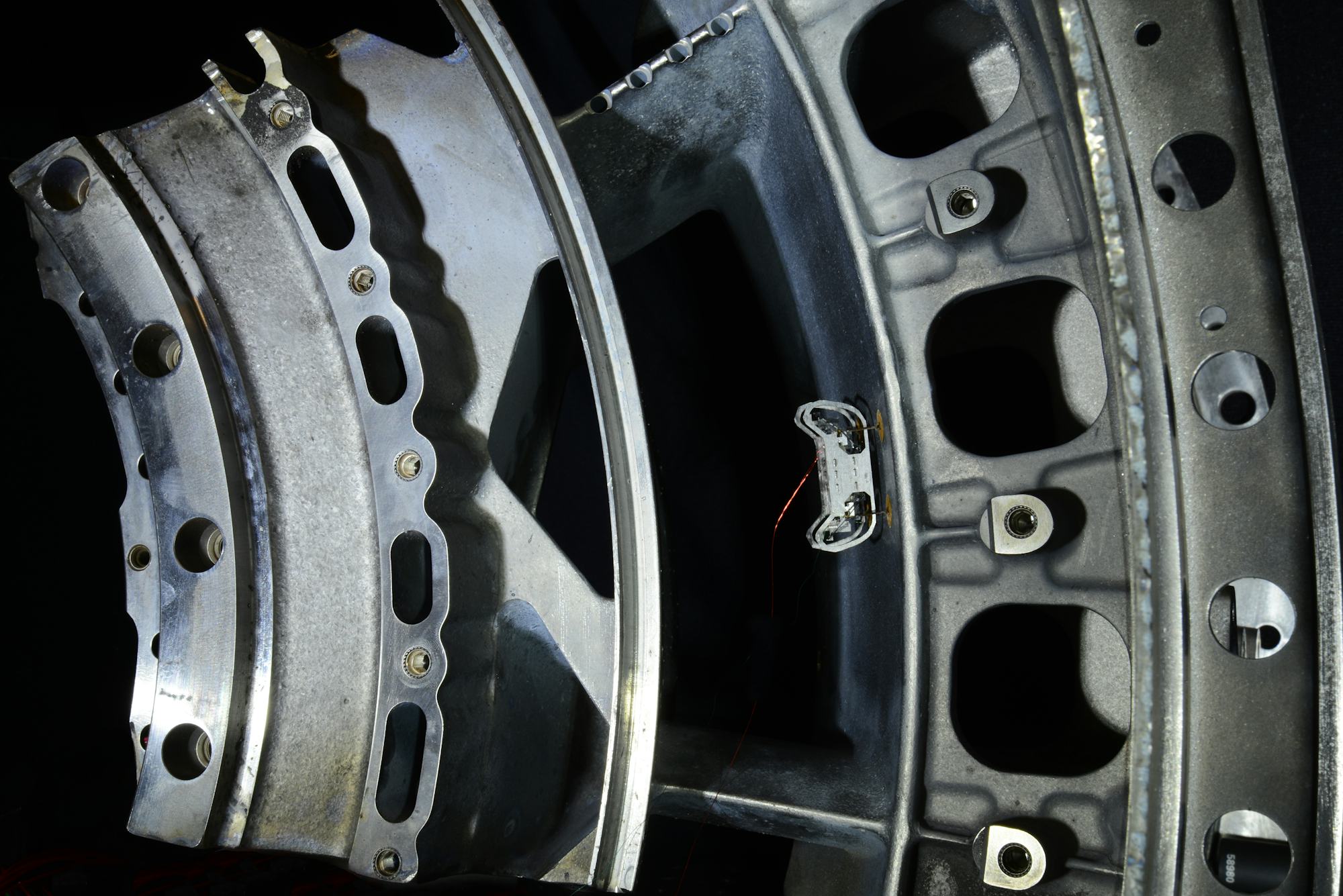
The research demonstrates tethered climbing on vertical, inverted and curved surfaces, including a curved commercial-engine section. Autonomous inspection would require further tests with a camera payload and a complete inspection sequence.
Read it alongside the SWARM concept.
Rolls-Royce’s SWARM material describes how miniature robots might be delivered into an engine and recovered. Read the records together: HAMR-E documents tethered climbing, while SWARM describes proposed deployment and retrieval. When reading an animation, distinguish physical demonstrations from proposed operations.
Sources
Factual descriptions refer to the listed public sources. Method transfer and further research questions are editorial discussion.