Watch the video
Tethered motion on vertical, inverted and curved surfaces. · Harvard University · 1080p source video
If the player is unavailable, visit the original source above.
01 / STUDY
Mechanism and experiments
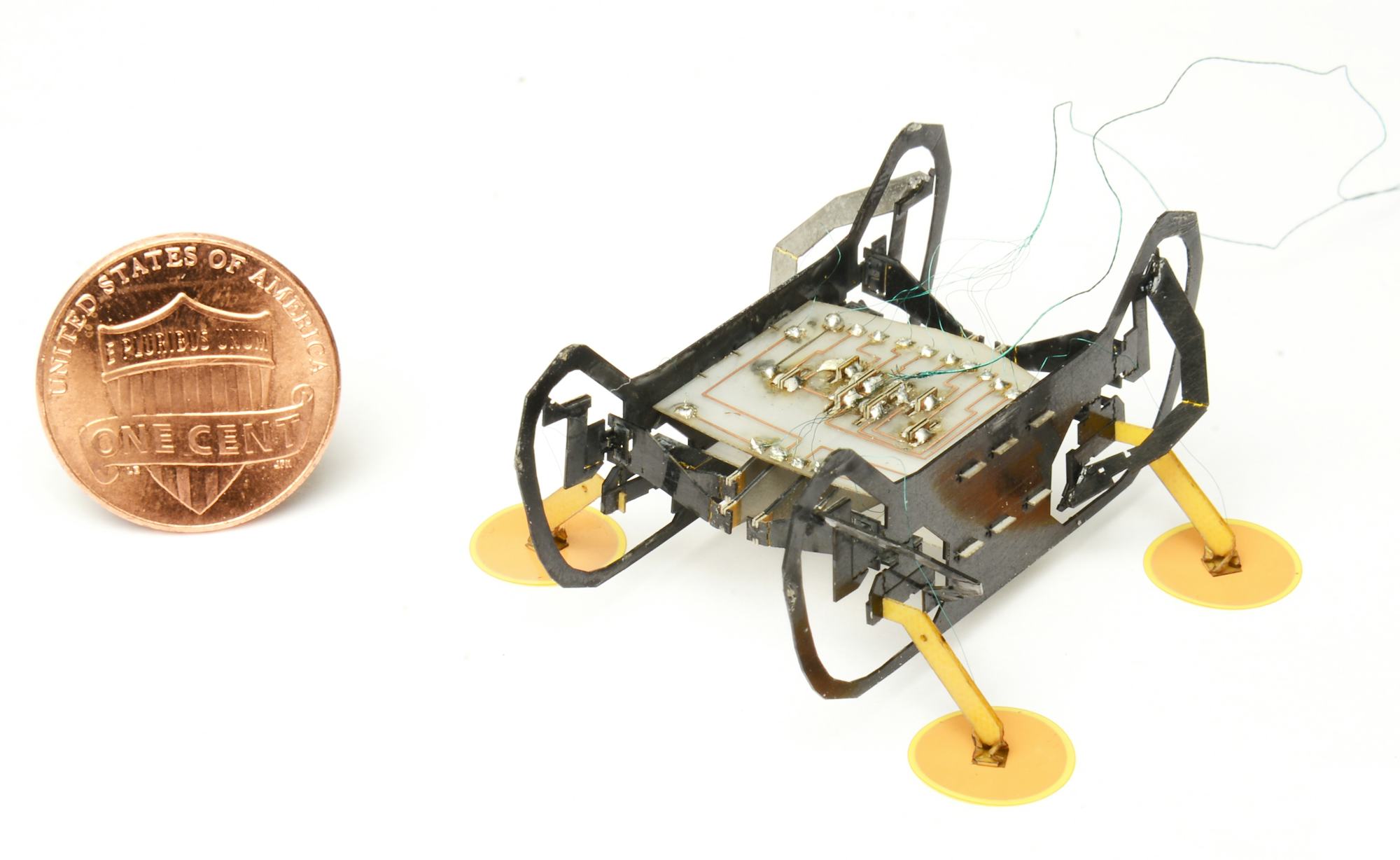
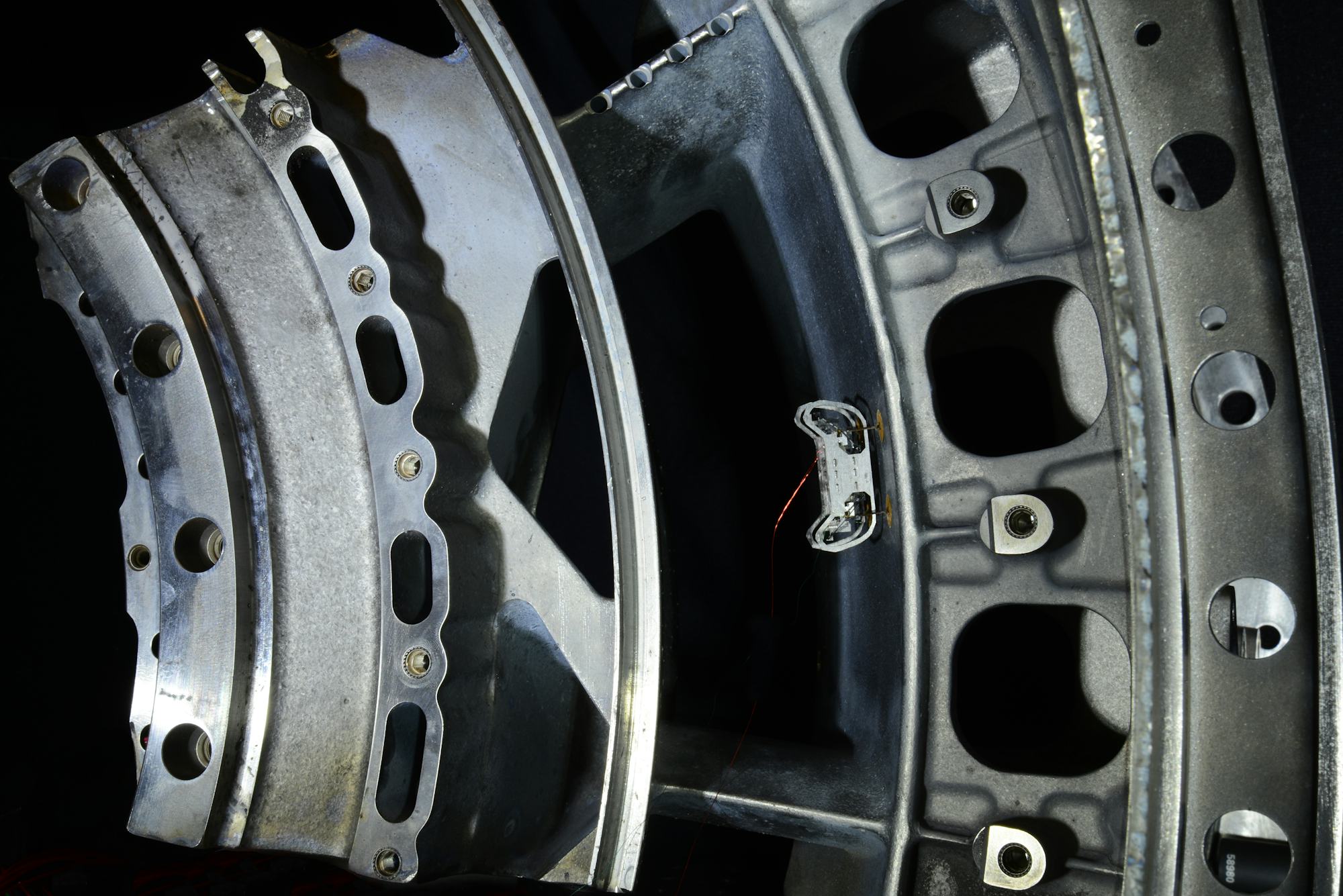
HAMR-E anchors to conductive surfaces with electroadhesive feet. Passive origami ankle joints accommodate local curvature. The 4.5 cm, 1.48 g prototype uses tethered power and control; experiments examined vertical and inverted climbing and locomotion on curved engine components.
02 / CONTEXT
Test conditions and scope
The experiments demonstrated tethered locomotion. Autonomous inspection with an onboard camera remains an application goal. This prototype is distinct from the 10 mm wireless units envisioned in the SWARM concept.
03 / SOURCE
Papers and primary sources
EXPERIMENT / IMAGES
Experimental images